

3D Printed Fridge Magnets That Actually Mean Something
Open most kitchen drawers in Australia and you'll find them: a tangle of bent tourist magnets, a pizza place's phone number, a bottle-opener shaped like a thong. Fridge magnets are the easiest souvenir in the world to buy and the easiest to forget. But a good one does something a fridge photo can't quite manage — it turns an everyday surface into a tiny gallery of the places, trips, and daily rituals that made you you.
This guide is about that second kind of magnet: the small, personal, place-based ones. We'll look at what people are actually searching for, what separates a well-made 3D printed magnet from a novelty that curls up by winter, how to personalise one so it means something, and how to keep it looking good. If you're buying a gift or just want your fridge to feel a little more like home, this is the practical version.
Why most fridge magnets end up in a drawer
The problem with the classic souvenir magnet is that it's generic. A magnet that says "SYDNEY" over a stock photo of the Opera House could belong to anyone who's passed through the airport. It doesn't hold a memory so much as gesture vaguely at one.
The two big categories you'll find online both have this gap. Photo-print magnets — the ones from the big chain photo labs — are personal in content but flat and impersonal in feel; they're a printed rectangle. Cheap moulded souvenir magnets are durable but say nothing specific about your life. What's missing in the middle is a magnet that's tied to a particular place or moment: the exact station you commute through, the campus where you spent three years, the city you had to leave.

What people are really searching for
Look at how Australians search around this topic and a pattern shows up. Plenty of people type "personalised fridge magnet gift," but the results are dominated by photo-tile services. The more interesting searches are narrower and more specific: "3d printed fridge magnets," "3d printed fridge magnets australia," and "best 3d printed fridge magnets." People add "3D printed" and "Australia" on purpose — they want something with a bit more shape and character than a flat photo, and ideally something made locally.
Read as questions rather than proof, those searches tell you what buyers care about: is it actually made here, is it well designed, and will it feel personal rather than mass-produced? That's the brief a good 3D printed magnet has to meet.
What makes a good 3D printed fridge magnet
Not all small 3D prints are created equal. A few things separate a magnet you'll keep from one you'll quietly retire.
Design legibility. The best small magnets read clearly at a glance — bold shapes, clean lettering, and colours that stay distinct at magnet size. A station sign or road sign works so well as a magnet precisely because it was designed to be read quickly in the first place.
A magnet that actually holds. The "fridge" part matters. A good magnet backing should hold a couple of sheets of paper — a shopping list, a school note — not just cling to the door on its own. If you're buying, look for a description that mentions a strong magnet backing rather than a token dot of magnetism.
Material and finish. Most decorative desktop 3D printing, including the magnets from Australian maker shops, uses PLA — a rigid, plant-derived plastic that holds fine detail and colour well. PLA is great indoors, but it's worth knowing its one real limit: it starts to soften at roughly 55–65 °C (its glass transition range) and only fully melts far higher, around 160–180 °C [1]. In plain terms, a fridge door is completely fine, but a sun-baked car dashboard or a spot right above the stove is not. We'll come back to care below.
It means something. This is the part the spec sheet can't cover. A magnet earns its place when it points at a real memory — your line, your suburb, your uni, your city.

Meaningful magnet ideas, by person
If you're stuck on what to actually get, start with the person and the memory rather than the object.
-
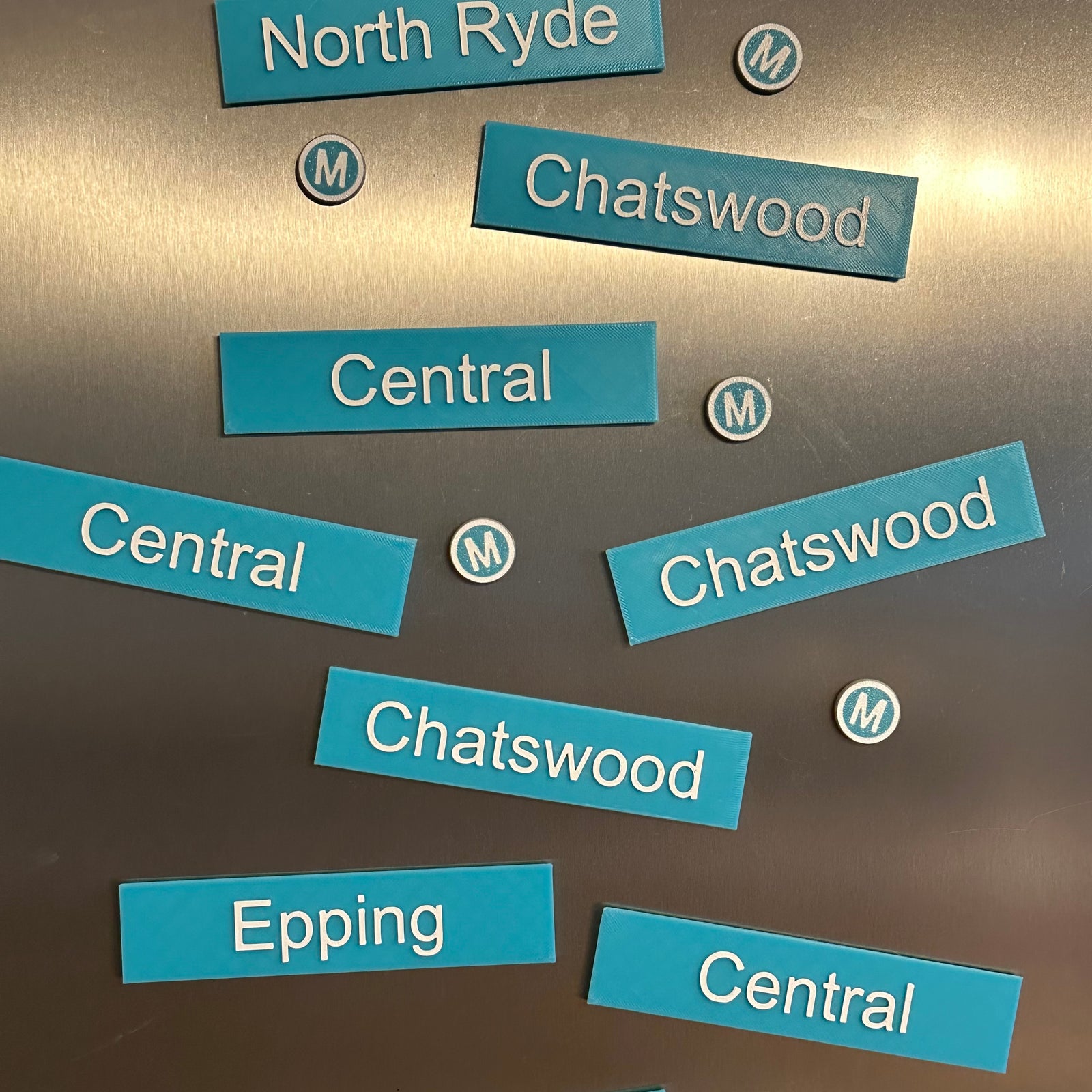
The commuter. A miniature Sydney Metro station-sign magnet of the stop they use every day is oddly moving — it's the backdrop of thousands of ordinary mornings. Independent, fan-made station-sign magnets recreate the look of real signage as a nostalgic keepsake (they're design-inspired tributes, not official transport merchandise).
-
The student or graduate. Campus-inspired magnets are a small, keep-forever way to mark years spent somewhere. They sit happily on a share-house fridge or a study-desk locker.
-
The homesick expat. For someone who's moved overseas, a magnet of their home city or their old station is light, postable, and a lot more personal than a keyring from the airport.
-
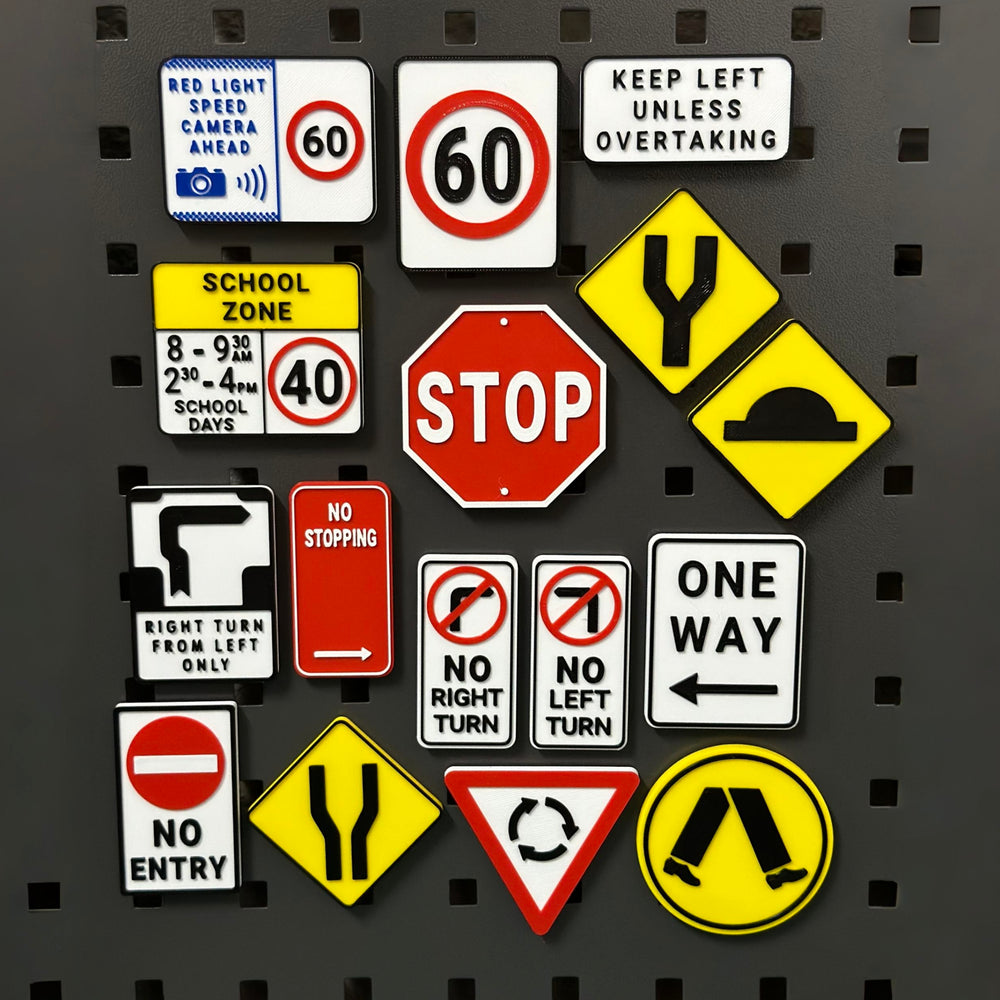
The new-home gift. A first fridge deserves a first magnet. A little set of Australian road-sign magnets — Stop, No Entry, School Zone, Roundabout — is playful, useful for holding up notes, and unmistakably local.
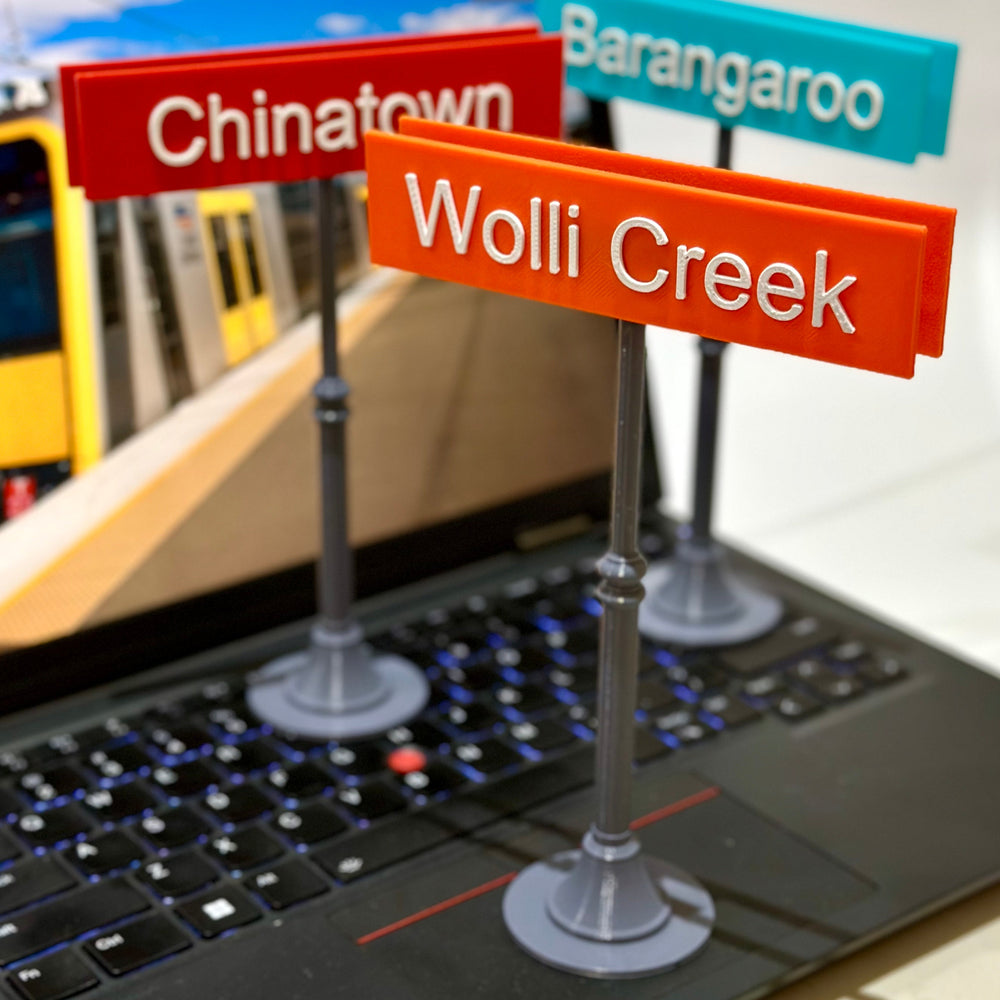
- The collector. Some magnets are built to be collected. A set of station signs lets someone "collect their line" one stop at a time, which is a gift that keeps giving at a few dollars a pop.
How to personalise it so it means more
Personalising is what pushes a magnet from nice to theirs. A few ways to do it:
- Custom names. Some 3D printed station-sign magnets can be made with a custom station or place name, so you're not limited to the stops on the shelf — you can get their station, even a tiny country one. (When ordering, leave a note with the exact name; lettering is usually adjusted to fit the length.)
- Build a set. Instead of one magnet, give a starter set of two or three stops along a meaningful line — the one they grew up on, or the run between home and work.
- Match the place. City-themed magnets — including slidable Sydney and Melbourne designs — are a neat way to nod to where someone lives now versus where they're from.
- Colour as a cue. Where colour options exist, matching a line colour or a favourite palette makes the piece feel deliberate rather than default.
Care and safety, honestly
Two practical notes so your magnet lasts and stays safe.
Heat is the enemy. Because PLA softens well below boiling — from around 55–65 °C [1] — keep 3D printed magnets off genuinely hot surfaces. A fridge door, a whiteboard, a locker, or a filing cabinet is ideal. Avoid leaving them on a hot car dashboard, on a sunny windowsill in summer, or right next to a stovetop or oven. To clean, wipe with a dry or barely-damp cloth rather than soaking them.
Small magnets and little kids or pets. Strong magnets are genuinely hazardous if swallowed — in Australia the ACCC has a permanent ban on small, loose high-powered magnets because swallowing two or more can cause serious internal injuries [2]. A magnet embedded in a display piece isn't a loose ball magnet, but the safe habit is the same: keep small magnetic objects up high and out of reach of young children and pets, and don't hand them to under-threes as toys.
None of this makes PLA magnets fragile — they're durable indoor objects. It just means treating them like the small decorative keepsakes they are.
Where Sliced 3D Print can help
Sliced 3D Print is a small Australian 3D printing shop, and place-based magnets are one of the things it does most. The range includes Australian road-sign magnets, Sydney Metro, train and light rail station-sign magnets, a Sydney Station Sign Collection, and slidable Sydney and Melbourne city magnets — most printed in durable PLA with a strong magnet backing, and priced from just a few dollars. If you'd rather have your station or a custom name rather than an off-the-shelf stop, the Metro station-sign magnets can be made to order, and the Custom Design collection is the place to start for something bespoke. If you're weighing up other Sydney keepsakes too, our guide to Sydney souvenirs beyond the Opera House is a good companion read.
Key takeaways
- Generic souvenir and photo-tile magnets feel impersonal; place-based magnets tied to a specific station, campus, or city carry a real memory.
- A good 3D printed magnet reads clearly at a glance, has a magnet strong enough to hold a note, and is well finished.
- Most are made in PLA, which is durable indoors but softens around 55–65 °C — keep them off hot dashboards, sunny sills, and stovetops [1].
- Keep small strong magnets away from young children and pets; swallowed magnets are dangerous [2].
- Personalise with a custom station name, a collectible set, or a city theme to make it truly theirs.
FAQ
Are 3D printed fridge magnets any good? Yes, for indoor use. Printed in PLA with a proper magnet backing, they're durable, detailed, and hold light notes well. Their main limit is heat: PLA softens from around 55–65 °C, so keep them off hot surfaces [1].
What's the difference between a 3D printed magnet and a photo magnet? A photo magnet is a flat printed image; a 3D printed magnet is a small sculpted object with shape and texture — a road sign, a station sign, a city scene — which is why place-based designs feel more like a keepsake than a print.
Can I get a custom station or place name on a magnet? Often yes. Some Sydney station-sign magnets can be made with a custom name — you leave the exact wording as a note when ordering, and the lettering is sized to fit.
Are 3D printed magnets safe around children? Treat them like any small magnetic object: keep them out of reach of young children and pets. Swallowing strong magnets is dangerous, and small parts are a choking risk, so they aren't toys for under-threes [2].
How do I care for a 3D printed PLA magnet? Keep it indoors and away from heat (dashboards, sunny windowsills, stovetops), and wipe it with a dry or barely-damp cloth. Treated gently, it will keep its colour and detail for years [1].